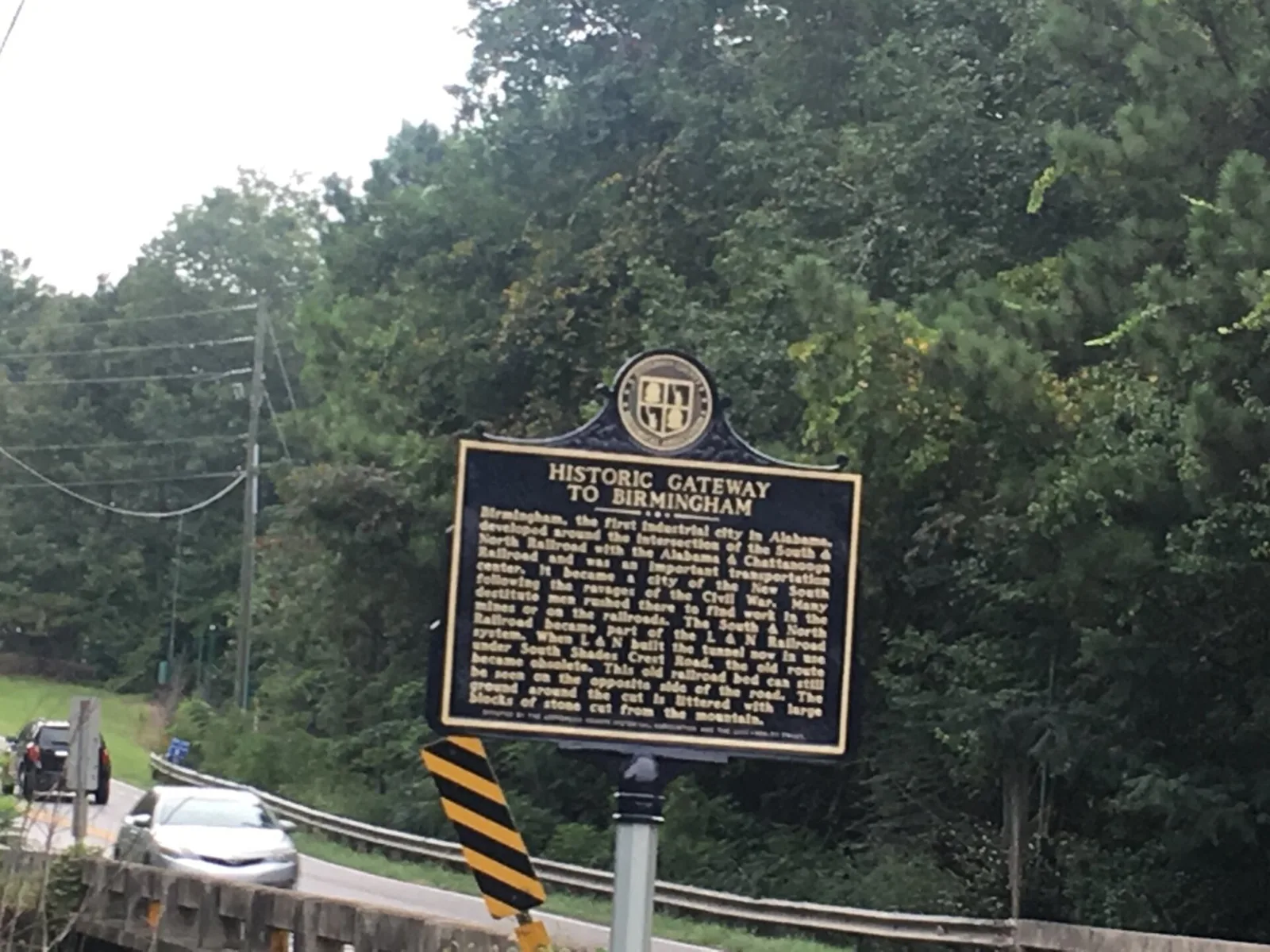
Hoover incorporated April 28, 1967, with 406 people. Its history: William H. Hoover, Bluff Park, Riverchase, historic districts, cemeteries and markers.
Last checked Oct. 17, 2026. Facts on this page come from the Hoover Historical Society’s history of Hoover, the City of Hoover’s About Hoover and Historical Districts pages and the National Park Service’s National Register data (May 22, 2026 release).
Hoover is a young city on old ground. It was incorporated on April 28, 1967, with 406 people, and the city says it now covers about 48.6 square miles in Jefferson and Shelby counties. The communities it absorbed, from Bluff Park on Shades Mountain to the coal country along the Cahaba River, go back to the 1800s.
Visiting and research
- Hoover Historical Society: 205-739-7316, info@hooverhistoricalsociety.org; archives in the Public Safety Center, 2020 Valleydale Road
- Folklore Center and Stinson Ole Place: on the campus of Bluff Park Elementary School; contact the society to arrange a visit
- Hoover Public Library local history: 200 Municipal Drive, 205-444-7800
- Report damage to a historic cemetery: Hoover police non-emergency, 205-822-5300
Before the city
Creek, Cherokee, Choctaw and Chickasaw people hunted and camped along the area’s rivers and creeks before white settlement, and the federal government acquired the land in 1814, the Historical Society says. Families including the Pattons, Actons, Baileys, Hales and Tylers bought land and started sawmills, farms, churches and schools.
Coal shaped the south side. The land sits over the Cahaba Coal Fields; the first attempt to mine it was in 1853, and mining sped up during the Civil War. The L&N Railroad reached Brock’s Gap in 1869. Around 1906 Henry DeBardeleben’s Alabama Fuel & Iron Company opened the Acton Basin, a mining area of nearly 42 square miles. The Chace family bought the mineral land in 1945, mined it for years and sold it in 1968 to Harbert Construction Company, which built Riverchase.
On Shades Mountain, Summit, now Bluff Park, was a resort known for its view, cool air and mineral water. A school and church opened in 1899, and the Bluff Park Hotel, built in 1909 on Hale family land, burned in 1925, according to the city.
How Hoover began
William H. Hoover founded Employers Mutual Insurance of Alabama in 1921. In 1944 he bought 160 acres along Tyler Road in Bluff Park, where his family’s home was finished in 1947. When the state began widening U.S. 31 south of Vestavia in 1953, he bought land along the highway, moved his company there and built homes for employees. That area became the Hoover community.
A 1964 vote to incorporate Hoover and Green Valley failed. A smaller area, four blocks long and one block wide, voted to incorporate on April 28, 1967. Don Watts was elected the first mayor.
Growth
| Year | Milestone |
|---|---|
| 1972 | Hoover Mall opens with 21 stores |
| 1978 | Hoover Chamber of Commerce established |
| 1980 | Riverchase annexed, Sept. 8 |
| 1983 | Hoover Public Library opens, Oct. 2 |
| 1986 | Riverchase Galleria and the Wynfrey Hotel open |
| 1988 | Education Committee appointed to study a city school system, which the mayor and council then established |
| 1992 | City limits reach Inverness and Greystone |
| 2002 | Aldridge Gardens opens; I-459 flyover to Galleria Boulevard and Highway 150 opens in November |
Source: Hoover Historical Society. The 2020 census counted 92,606 residents; see Hoover population and growth.
National Register of Historic Places
The National Park Service’s National Register data lists Stonecroft, 1453 Shades Crest Road, listed Nov. 29, 2001. The register gives its city as Birmingham, the mailing address for much of Hoover; the Census Bureau’s geocoder places the address inside Hoover city limits.
Historic districts and state-listed homes
The city recognizes two historical districts, according to its Historical Districts page:
- Park Avenue Historical District: 51 structures, with development dating from the 1885 sale of Gardner Hale’s land. Its landmarks included the 1923 Bluff Park Elementary School and the 1924 Independent Presbyterian Church Children’s Fresh Air Farm.
- Shades Crest Road Historical District: part of the road once known as Indian Wagon Trail.
State-listed homes, from the city’s pages and the Historical Society:
| Home | Built | State listing |
|---|---|---|
| Overseer’s House, Chapel Road and Park Avenue, Bluff Park | 1889 | 2000 |
| Hale-Joseph House | 1910 | 1994 |
| Hoover-Randle Home, Tyler Road, built by William H. Hoover | 1947 | 1990 |
Cemeteries
- Bluff Park Cemetery (also called Oxmoor Heights Cemetery), Tyler Road and Fancher Drive: about 83 graves on land given around 1898-99; deeded to the city in 1992 and listed by the Alabama Historical Commission on May 29, 2003.
- Parkwood Cemetery: 1 acre, first deeded in 1873 for a Methodist Episcopal church; oldest marker Jan. 1, 1876; on the Alabama Historical Cemetery Register since Sept. 11, 2003.
- Mars Hill Cemetery, beside Grace Community Church on Mars Hill Road: church founded in 1876; on the state cemetery register since Dec. 3, 2003. The city notes the church is in an unincorporated area surrounded by Hoover.
Markers and the Folklore Center
The Hoover Historical Society has placed markers including the Founding of Hoover marker at Braddock Drive and U.S. 31 (2004), Ross Bridge (2006), Patton Chapel Church (2006) and the Crawford Fire Tower Cab (2012), according to its markers list. On Sept. 28, 2026, a marker honoring the Bluff Park Art Show, begun as a school fundraiser in 1964, was unveiled at Bluff Park Community Park, the city reported.
The society’s Folklore Center on the Bluff Park Elementary campus, dedicated Nov. 9, 1997, centers on the Stinson Ole Place, a two-story 1840s log house moved from rural Shelby County, according to the city’s Folklore Center page.
Related: parks and trails, population and things to do this month.
Frequently asked questions
When was Hoover, Alabama, founded?
Hoover was incorporated on April 28, 1967, after a vote by residents of a small area of the Hoover community along U.S. 31. The new town had 406 people, according to the Hoover Historical Society.
Who was Hoover, Alabama, named after?
William H. Hoover, who founded Employers Mutual Insurance of Alabama in 1921, moved his company to U.S. 31 and bought land for homes for his employees. The area became known as the Hoover community.
Are there National Register of Historic Places sites in Hoover?
Stonecroft, 1453 Shades Crest Road, was listed on the National Register on Nov. 29, 2001. Several Hoover homes and cemeteries are on the Alabama Register of Landmarks and Heritage and the Alabama Historic Cemetery Register.
When did Riverchase become part of Hoover?
Riverchase was annexed on Sept. 8, 1980, according to the Hoover Historical Society. Inverness and Greystone were added by 1992.
Have your say